
Cyberpunk 2077 Review in 2026: The Redemption Story Completed?
1,916 views
Few games have made players completely change their opinion of them. Cyberpunk 2077 is the rare case where the phrase “give it another chance” eventually became legitimate advice.
The December 2020 launch was rough enough to overshadow the game's strongest qualities. Console performance problems, crashes, visual glitches, weak police behavior, awkward progression systems, and missing or unfinished-feeling features created a reputation that seemed almost impossible to repair.
Yet here we are in 2026.
After the massive Update 2.0 overhaul, Phantom Liberty, subsequent updates including 2.2 and 2.3, and the later Patch 2.31, Cyberpunk 2077 is no longer being judged against its launch build. The more interesting question is different:
If you bought Cyberpunk 2077 for the first time in 2026, would it actually feel like a great RPG—or merely a repaired version of a failed promise?
I've looked at the game from that perspective, including its current gameplay systems, performance expectations, expansion content, PC technology, and the things CD Projekt RED never completely changed.
The redemption really happened
The biggest mistake with the modern version of Cyberpunk 2077 is treating its recovery as nothing more than bug fixing.
Update 2.0 fundamentally changed the game.
The perk system was rebuilt, cyberware progression was redesigned, vehicle combat was introduced, the police system received a major overhaul, and the overall combat/progression loop became much more coherent. CD Projekt RED also moved the PC requirements upward and made an SSD part of the supported configuration because the game's streaming demands had increased.
That last point matters more than it sounds.
An old PC that technically launched the 2020 release isn't necessarily a sensible machine for the modern game. Cyberpunk became considerably more ambitious technically, and the SSD requirement reflects that.
Then Phantom Liberty arrived.
That expansion didn't merely add another chunk of missions. It demonstrated what the reworked Cyberpunk framework could actually do when CD Projekt RED had learned from the original release.
By 2025, Phantom Liberty had passed 10 million copies sold, while Cyberpunk 2077 itself had surpassed 35 million copies.
That's a remarkable turnaround.
Night City is still the main attraction
Forget the graphics for a moment.
Night City works because it has personality.
Watson feels different from Westbrook. Santo Domingo doesn't resemble Pacifica. Corpo Plaza communicates wealth and control before a character explains either concept to you.
Billboards shout contradictory advertisements. Radio broadcasts fill otherwise empty drives. Gang territories have their own visual language. Tiny environmental details often tell stories that the main quest never bothers explaining.
That makes simply moving through the city worthwhile.
And Update 2.3 added something surprisingly useful: AutoDrive. Any owned vehicle can automatically drive toward a selected destination, while a cinematic camera lets you sit back and watch Night City pass by. Delamain cabs were also added as an on-demand transportation option after completing the relevant Delamain storyline.
It sounds minor.
It isn't.
After dozens of hours, constantly driving manually between objectives can become repetitive. AutoDrive turns some of those journeys into sightseeing instead of another traffic-light simulator.
Patch 2.31 subsequently improved AutoDrive so vehicles navigate traffic more reliably, overtake blocking cars, and behave better during free-roam driving.
Combat finally matches the fantasy
This is probably the biggest difference a returning player will notice.
The old Cyberpunk could feel like a shooter with RPG statistics attached. The modern version feels much more like a proper build-driven action RPG.
You can become a stealth netrunner, blade specialist, shotgun-heavy bruiser, smart-weapon user, pistol-focused gunslinger, or some bizarre hybrid that only makes sense after you've spent twenty minutes rearranging cyberware.
And the game encourages experimentation.
The redesigned perk trees aren't simply collections of tiny percentage increases. Many perks actually change what V can do.
Movement builds can become extremely mobile. Netrunner builds can turn hacking into an offensive chain reaction. Blade builds reward aggressive positioning. Heavy weapons and cyberware can transform V into something considerably less subtle.
That flexibility is one reason Cyberpunk has aged so well.
The build isn't just a number sheet. It changes how you play.
Phantom Liberty is where the redemption becomes convincing
If Update 2.0 repaired the foundation, Phantom Liberty showed what could be built on top of it.
Dogtown has a different atmosphere from most of Night City. It's rougher, more militarized and claustrophobic, and the expansion's espionage-inspired missions create a stronger sense of uncertainty than many conventional open-world objectives.
The characters are another major strength.
Songbird and Solomon Reed aren't simply quest dispensers. Their motivations collide, and neither character fits neatly into a hero-or-villain box.
The expansion also gives players choices that can lead to substantially different experiences, which makes it particularly valuable for anyone returning to the game after several years.
Critics were already praising the expansion alongside Update 2.0, with Metacritic's collected reviews reflecting the view that the combination had pushed Cyberpunk toward the complete RPG experience it had originally promised.
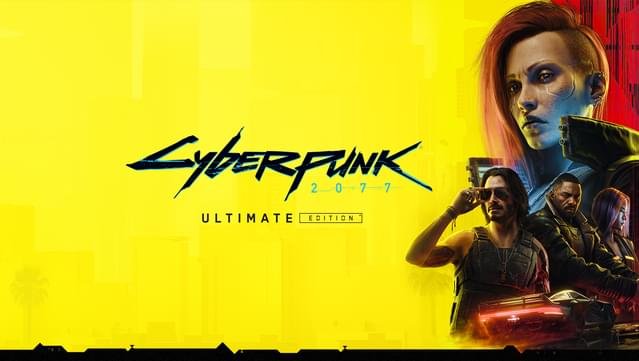
If you're buying the game fresh, the Ultimate Edition is the obvious version to consider when its pricing makes sense, because Phantom Liberty is far too substantial to treat as an afterthought.
What about performance in 2026?
This is where the answer needs more nuance.
Cyberpunk 2077 is dramatically more mature than the 2020 release, but it remains one of the more technically demanding open-world games around.
On PC, features such as ray tracing, path tracing, NVIDIA DLSS, AMD FSR and frame-generation technologies can produce radically different performance depending on your hardware and settings. Update 2.3 added support for AMD FSR 3.1 Frame Generation, Intel XeSS 2.0 and HDR10+ Gaming, alongside its Mac release for Apple silicon.
The important practical lesson is simple:
Don't blindly select Ultra and expect the best experience.
A sensible 1440p configuration with appropriately chosen upscaling can feel considerably better than forcing every ray-tracing option to maximum and accepting unstable frame rates.
Path tracing is beautiful.
It is also expensive.
For a normal gaming session, consistent frame pacing often matters more than squeezing every last lighting effect out of the GPU.
Is the game actually bug-free now?
No.
That would be an exaggeration.
You can still encounter the occasional NPC behaving strangely, an animation looking slightly wrong, a vehicle doing something physics apparently considers hilarious, or an environmental object that doesn't quite cooperate.
But that's a very different problem from the launch disaster.
Patch 2.31, released in September 2025, was still fixing specific issues with AutoDrive, Delamain cabs, CrystalCoat and Photo Mode.
That tells us two things.
First, CD Projekt RED continued polishing the game long after the major redemption moment.
Second, Cyberpunk is still a huge piece of software with enough moving parts to produce occasional weirdness.
Those remaining quirks are annoying.
They aren't the reason I'd tell someone to avoid the game.
The biggest weakness never disappeared
Here's the uncomfortable part.
Cyberpunk 2077 still isn't the endlessly reactive life simulator that some pre-release expectations suggested.
Night City looks incredibly detailed, but its civilians aren't operating with the depth of a full simulation.
Your choices matter. Some matter enormously.
But not every conversation creates a radically different future. Some systems are carefully authored rather than genuinely systemic. Factions don't behave like independent societies constantly evolving around V.
That distinction becomes noticeable if you compare Cyberpunk with something like Baldur's Gate 3, where player choices can produce remarkably unpredictable consequences.
Cyberpunk is more cinematic.
It wants to tell you a carefully constructed story while giving you room to influence how you approach it.
That's not bad design.
It's simply a different kind of RPG.
Cyberpunk 2077 vs the RPG competition
Game | Biggest advantage over Cyberpunk 2077 |
|---|---|
Baldur's Gate 3 | Deeper systemic choices and role-playing reactivity |
The Witcher 3 | Exceptionally consistent quest writing and world storytelling |
Starfield | Broader space exploration and sandbox freedom |
Cyberpunk 2077 | Real-time combat, atmosphere, cinematic presentation and build variety |
Cyberpunk's strongest position is its combination of all those elements.
Few games give you a dense futuristic city, first-person shooting, melee combat, hacking, character-driven quests and heavily customizable builds while maintaining this level of visual presentation.
That combination remains unusually good.
What players think now
The clearest evidence isn't a marketing statement.
It's player sentiment.
Steam currently lists Cyberpunk 2077 with hundreds of thousands of English reviews and a “Very Positive” overall English rating. Its recent reviews are also overwhelmingly positive.
That doesn't prove the game is perfect.
It does show how dramatically public opinion has shifted.
A game that once generated refund headlines is now routinely recommended to new players.
That's a pretty extraordinary reversal.
Should you play Cyberpunk 2077 in 2026?
Yes.
But play the modern version, not the version frozen in your memory from December 2020.
If you've never played it, this is arguably the best possible time to start. If you abandoned it years ago, there's enough mechanical change to justify another run rather than simply loading an old save and expecting everything to feel familiar.
For the best experience:
Install the latest version. Don't judge the game using launch-era footage or reviews.
Play the main story alongside side quests. Some of the strongest character writing lives outside the critical path.
Try a real build. Don't spend the entire game using whatever weapons happen to drop.
Add Phantom Liberty. It substantially strengthens the complete package.
Tune PC graphics for consistency. Ray tracing and path tracing are impressive, but stable performance wins during long sessions.
Steam's player response is now strong enough that the game's reputation no longer needs defending on technicality alone.
FAQ
Is Cyberpunk 2077 worth buying in 2026?
Yes. The modern version is a polished action RPG with excellent writing, strong combat builds and one of gaming's most memorable open worlds.
Is Cyberpunk 2077 finally fixed?
For practical purposes, yes. The major launch-era problems have been addressed, although occasional bugs and open-world glitches can still happen.
Do I need Phantom Liberty?
No, the base game works without it. But if you want the strongest version of Cyberpunk 2077, Phantom Liberty is highly recommended. It adds a substantial new storyline and strengthens the overall RPG experience.
Does Cyberpunk 2077 still require a powerful PC?
It can. Update 2.0 raised the supported PC requirements and made an SSD a requirement for the modern version. Ray tracing and especially path tracing can push hardware much harder than conventional settings.
Will Cyberpunk 2077 receive another major expansion?
CD Projekt RED's focus has moved toward the next Cyberpunk game rather than another large expansion for 2077. The existing game, however, has already received an unusually long period of post-launch support.
Final verdict: Was the redemption completed?
Yes. Mostly.
Cyberpunk 2077 didn't become the game that every pre-release promise made people imagine. Some of those ambitions were simply never going to survive contact with development reality.
That's okay.
What exists in 2026 is better judged on its own terms.
It's a spectacularly atmospheric open-world RPG with excellent character writing, flexible builds, memorable missions, outstanding art direction and a combat system that is vastly stronger than what players received at launch.
The transformation is also measurable. More than 35 million copies of Cyberpunk 2077 had been sold by the end of 2025, while Phantom Liberty passed 10 million.
The launch wasn't erased.
The redemption doesn't need to erase it.
What matters is that if you install Cyberpunk 2077 today, the first thing you experience isn't a broken promise. It's a very good game.
And if you've never visited Night City, 2026 is finally a pretty easy time to take the ride.
Final Score: 9/10
Cyberpunk 2077 is no longer a game waiting to be redeemed. The redemption story is finished; now it's simply a question of how many hours you want to spend exploring Night City.
Cyberpunk 2077 review
open world RPG
futuristic games
CD Projekt Red
action RPG
Found this helpful? Share it!